Why did the art market in photographs arrive so late?
Why did the art market in photographs arrive so late?
The emergence of a serious art market in photographs in the 1960s was not simply the result of suddenly enlightened taste. It arrived late because of deep structural, ideological, and economic conditions that had constrained photography since its invention in 1839. To understand why it took so long one has to look at both the extended debate over photography’s legitimacy as art and the ways its support systems evolved outside the conventional art market.
From the vantage point of the 1960s, the emergence of a serious art market for collectible photographs can look like a belated but straightforward correction: museums began
to collect, galleries began to sell, critics began to write, and photographs finally took their “rightful” place alongside painting and sculpture. But if you trace the medium’s history from 1839 forward, the lateness of that shift is anything but incidental. It was produced by structural, ideological, and economic conditions that shaped almost every aspect of photography’s practice and reception for well over a century.
What follows is an account of those conditions—some internal to the medium (its technologies, institutions, and self-definitions), some external (the structure of the art world, the economics of reproduction, and wider cultural attitudes toward images). I’ll focus deliberately on two “alternative” support systems that did not operate as art-market mechanisms—the Camera Club of New York and the New York Public Library’s Picture Collection—because they demonstrate how photography developed rich cultures of practice and circulation outside the realm of buying and selling unique objects. That non-market development, paradoxically, both delayed and prepared the ground for a later market in collectible prints.
I. A medium defined against art: 1839–1880s
When Daguerre and Talbot announced their processes in 1839, the most celebrated property of photography was its unprecedented accuracy: the “mirror with a memory,” an instrument for science and commerce more than for art. Early practitioners were often chemists and physicists; their authority rested on technical mastery and utility. The earliest American photographic discourse reflects this orientation. Marcus Aurelius Root’s The Camera and the Pencil (1864) argued passionately that photography could be one of the fine arts, but he did so against a prevailing sense that the camera was a mechanical, not an expressive, tool. Root felt compelled to insist that “sun painting is not a mere mechanical process… it is one of the fine arts.”¹
Having framed photography’s “essence” as factual recording, the culture around it—and especially the art world—created a conceptual wedge between “art” and “photograph.” Painting and sculpture were valued for selection, interpretation, and personal expression; photography was valued for its ability to render appearances faithfully. Even sympathetic writers reinforced the distinction. An 1880s editorial in The Saint Louis and Canadian Photographer declared bluntly: “The realm of Photography is realism. The realm of Art is idealism… Photography… has conferred a thousand-fold more happiness on mankind than Art ever did, or ever will.”² That happiness, however, was precisely what consigned photography to a lower cultural rank: as an “earthy” tool of documentation, it was considered outside the fine-art hierarchy.
This split had consequences. Because photography’s usefulness was so obvious, it quickly embedded itself in journalism, science, commercial portraiture, and industrial documentation. Those routes offered revenue and institutional support—but they reinforced the idea that “real” photography was factual and utilitarian. For the art world, this meant there was little incentive to build parallel structures—academies, salons, markets—for photographs as artworks in the way it did for painting and sculpture. And for photographers themselves, the path to legitimacy ran through that existing fine-art system, with all its biases.
II. Pictorial photography and the art-claim: 1880s–1910
As the technology simplified in the 1880s—with gelatin dry plates and hand cameras—photography exploded among amateurs. F.C. Beach described dry plates and portable cameras making photography “accessible beyond the confines of the professional studio and the scientific laboratory,” and noted the rise of amateur societies that saw the camera “not just for record-keeping, but as a means of personal expression and aesthetic pursuit.”³ Yet that democratization exacerbated the ideological problem. The more the public experienced photography as a pastime and “mere sport,”⁴ the more tenuous its claim to serious art seemed.
The pictorial movement arose as an organized attempt to change that. In Europe, figures like Henry Peach Robinson and Peter Henry Emerson argued that photographs could be judged by the same criteria as paintings—composition, tonality, mood. Emerson insisted that “straight” photography (unretouched) could express emotion and deserved the status of fine art.⁵ In Britain the Linked Ring founded the Photographic Salon as an exhibition judged by painters, stressing personal vision and artistic intent, and declared that an original pictorial photograph “must be judged by the same laws as any other original production in monochrome” and “must show distinct evidence of ‘personal artistic feeling and execution’.”⁶
In the United States, the debates around “art photography” were intense and often defensive. Emma J. Fitz’s 1894 essay “Photography as a Fine Art” railed against the mediocrity of annual exhibitions and asserted that photography must “strive for artistic honors” and “win for itself a place among the fine arts” through “honest effort and the pursuit of art for art’s sake rather than for medals.”⁷ Journals like American Amateur Photographer spoke of photography as a “pictorial age” medium, which could supply a new form of art in a culture saturated with images.⁸
At the same time, photographers recognized the peculiar limits of their medium. An 1880s article in Philadelphia Photographer acknowledged that photography was “sadly hampered in the direction of selection, rejection, invention, and in the means of technical execution.”⁹ It could render “the growing spirit of the age” through “artistic representation of facts” but was structurally confined to realism. That realistic bias did not make it un-artistic, but it made its art different—and difficult to reconcile with definitions of painting built around imaginative invention.
Institutions like the Photographic Society of Philadelphia and the joint exhibitions of the Boston, New York, and Philadelphia camera clubs in the late 1880s and early 1890s tried to stabilize standards. Catalogues and essays insisted that only photographs showing “distinct evidence of personal artistic feeling and execution” should be exhibited.¹⁰ The Vienna Camera Club and later the Linked Ring banned medals, aiming to create an elite “salon” that conferred prestige through inclusion rather than prizes.¹¹ This was as much about constructing an art world for photography as about aesthetics.
Yet these efforts ran into structural obstacles:
- • No academy, no pedagogy: As Ulrich Keller points out, “the very nature of the photographic medium reduced the significance of schooling and education. While a certain amount of technical training was important and was occasionally offered on a trade school level, the operation of a camera involved too few difficulties to permit the emergence of a full-fledged academic teaching system.”¹² Without academies, there were no formalized stylistic doctrines or generations of trained “art photographers” analogous to painters.
- • Amateur economics: The leaders of pictorial photography—Stieglitz, Demachy, Henneberg, Kühn—were, by and large, financially secure amateurs. Keller notes that “unlike the Impressionists or the German ‘Secessions’, the elitist photo-clubs did not employ their separatist strategy in defence of vital economic interests. With a few exceptions their members were not only too wealthy, but also too much involved in their respective professional fields to look upon art photography as a means of making a living.”¹³ That amateur status meant their institutional project—salons, journals, clubs—was directed primarily at prestige rather than income.
- • Industrial sponsorship and reproduction: The burgeoning photographic industry—Kodak, Anthony & Scovill, Zeiss—recognized early that “the growth of ‘artistic’ aspirations among photo amateurs automatically translated into increased sales of photographic equipment.”¹⁴ Manufacturers sponsored exhibitions and journals; ads praised “Velox” as the paper “Steichen does” use.¹⁵ But their business model was selling cameras and supplies, not unique works. Photographs were endlessly reproducible; commercial uses (illustrated magazines, postcards, advertising) depended on photographic reproduction, not on the singular object.
Taken together, these factors helped create what Keller calls a “pseudo art world”: “a prestige-oriented pseudo art world, which… stressed questions of appearance at the expense of substantive issues,”¹⁶ a dense network of salons, periodicals, clubs, and discourses that mimicked the institutional structures of fine art, but without its economic underpinnings. Exhibitions were lavishly mounted, with exquisite gravure portfolios (Camera Notes, Camera Work, Die Kunst in der Photographie), but “even the most distinguished photographic Salons were deprived of the link between display and sale which alone could have guaranteed the ‘seriousness’ of the exhibition.”¹⁷ Attempts to install a “good salesman” at a New York salon to sell prints fizzled; art photographers’ “only real market,” Keller notes, was “popular magazine illustration.”¹⁷ Within that pseudo art world, photographs were valued, but as exemplars of taste, as tools for education, as signs of participation—not as collectible commodities in the way paintings and sculptures were.
III. Camera clubs and organized amateurism: photography as social practice
The Camera Club of New York, founded in 1884 as the Society of Amateur Photographers and reorganized in 1896, is perhaps the most illuminating case study of how photography was cultivated outside the art market. Its founding was not a commercial initiative but a response to a “void,” as Frederick C. Beach put it in 1884: New York lacked “a dedicated association for the city’s burgeoning non-professional photographers.”¹⁸ Beach articulated a dual mission: to enable one “to get a glimpse of art and learn the nature of chemicals.”¹⁹
The club’s activities exemplified a certain kind of institution:
- • Technical and social infrastructure: The club offered darkrooms, lecture halls, and lantern-slide projection facilities. It hosted regular meetings where members discussed new processes—dry plates, hand cameras, photogravure, color photography.²⁰ It ran courses and demonstrations, integrating photography with broader scientific and artistic currents (e.g., Frederic E. Ives’s color processes).²¹
- • Collective viewing and critique: Lantern-slide nights and print exhibitions were central. As Martha Sandweiss and Mary Panzer note, by the 1880s attendance at slide shows in Philadelphia swelled from about a hundred to over eight hundred.²² These were social events, with lectures and music, where work was shared, debated, and judged—not sold. Portable projection (magic lantern) amplified photography’s reach into schools, churches, clubs.²³
- • Democratic membership and amateur ethos: Serious amateurs—often middle- and upper-middle class—treated photography as a “passionate, part-time pursuit,” guided by professional standards but not seeking livelihood.²⁴ Publications like American Amateur Photographer and the Club’s own Camera Notes repeatedly emphasized that serious amateurs distinguished themselves from casual snapshooters and from purely commercial professionals.²⁵ The Camera Club’s mission was explicitly to “advance both the art and the science of photography.”²⁶
Alfred Stieglitz’s tenure as editor of Camera Notes (1897–1902) injected a strong pictorialist aesthetic into this milieu. The journal was beautifully printed, with tipped-in gravures, and insisted that only photographs representing “the development of an idea, ‘the evolution of an inward principle, a picture rather than a photograph’” would be reproduced.²⁷ It argued for photography’s capacity to “transcend finite reality” and reveal “the truth of the universal.”²⁸ Yet Camera Notes was still a club organ, addressed to members and amateurs, part of an environment of shared enthusiasm and contribution. Even in its most rarefied mode, it did not function primarily as a sales catalogue.
That tension—between elitist pictorialism and democratic amateurism—eventually became unsustainable. By 1901, many club members resented the exclusionary emphasis on art photography and felt their own scientific or documentary work was being marginalized.²⁹ Stieglitz’s formation of the Photo-Secession (1902) was, in part, an admission that he could not turn the Camera Club into the kind of exclusive avant-garde institution he wanted; he founded a separate group, with its own gallery (“291”) and journal (Camera Work), to pursue his artistic agenda.³⁰
But even in the Photo-Secession, the structural conditions described earlier persisted. Camera Work’s gravures were prized; some prints were sold; yet the economics were precarious. Stieglitz devoted enormous energy to organizing exhibitions, writing manifestos, and placing photographs in a few art museums.³¹ His most durable contributions lay in building cultural legitimacy—winning space for photography in the Metropolitan Museum of Art and organizing exhibitions of painters like Matisse and Picasso.³² That legitimation was crucial, but it did not immediately create a robust market in collectible prints.
IV. The New York Public Library Picture Collection: photography as democratic resource
If the Camera Club demonstrates one kind of non-market institution—organized amateur practice—the New York Public Library’s Picture Collection exemplifies another: photography as a democratic, utilitarian archive.
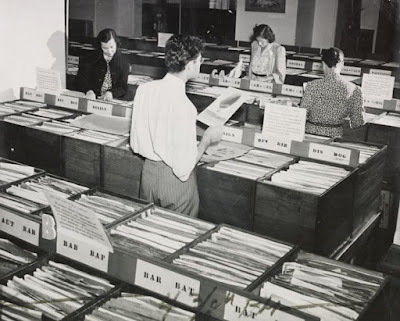
Founded in 1914 (but drawing on earlier collecting), the Picture Collection was conceived not as an art repository but as a “service collection” of images, including photographs, prints, and postcards, organized by subject and available for circulation. Romana Javitz, who led it for decades, articulated its philosophy in explicitly anti-elitist terms. She treated pictures “not as rarefied art objects but as documents, ‘classified objectively for [their] individual content,’ and made available for ‘fact-finding, teaching, propaganda, or the creative channels of theatre, literature, dance and cinema’.”³³ Crucially, the Picture Collection’s mission was “not about imposing standards or taste, but about enabling individuals—regardless of profession or background—to use images for their own purposes.”³³
Structurally, this had several implications:
- • Reproducibility: The Picture Collection assumed that images—even photographs by significant makers—could be handled, copied, reused. Classification was by subject (“Children—playing,” “Factories—interiors”) rather than by author. Photographs entered circulation as visual information, not as unique, signed objects.³⁴
- • Accessibility over scarcity: Javitz’s aim was to democratize visual literacy. Teachers, designers, writers, activists could borrow and use images. Photographs were valued for their capacity to inform and inspire in myriad contexts, not for their scarcity.³⁵
- • Support for documentary and socially engaged work: The Picture Collection actively acquired photojournalistic and documentary material. It was a support system for photographers interested in the social uses of images (Jacob Riis, Lewis Hine, later Dorothea Lange), reinforcing a conception of photography as a tool for “fact-finding” and social analysis rather than as collectible art.³⁶
This institutional orientation deeply shaped the ecology of photography in New York. When Lewis Hine was “rediscovered” in the late 1930s, he was celebrated primarily as a documentary pioneer;³⁷ his photographs entered museum collections, but their identity as “documents” remained dominant. The NYPL’s Picture Collection and similar archives supported this identity by giving documentary work a meaningful life—through use and reuse in education, journalism, and social research—but not through the art market.
V. Ideological divides: art vs document, straight vs pictorial
Overlaying these structural realities was a long-running ideological debate that reinforced photography’s marginal position in the art market. It took several intertwined forms:
- 1. Art vs document: Pictorialists, as noted, sought to separate “art” photography from “mere factual reporting.” Stieglitz wrote in 1899 that “the real photography, the photography of to-day” was not represented by “merely accurate and technically perfect images of professionals,” but in the work of amateurs “who loved art and sought some medium other than brush or pencil through which to give expression to their ideas.”³⁸ Beaumont Newhall later summarized this view: “Stieglitz brought America a message… that photography, he said, is capable of more than factual reporting. It can become a personal expression of one’s emotional reactions to life, a potential art.”³⁹
That rhetoric, however, contributed to a polarized vocabulary in which “art” and “document” became mutually exclusive categories. Documentary photographs—news images, scientific records, utilitarian pictures—were excluded from consideration as art, regardless of their formal or expressive qualities. Newhall explicitly separated “art” from “news,” “scientific,” and “documentary” photography in his histories.⁴⁰
As Allan Sekula and others have argued, this semantic split made it difficult to see the aesthetic dimension of socially engaged work. Walker Evans’s critique in 1969—that Stieglitz had forced “art” into “quotation marks and unwonted earnestness” and that this “aestheticism engendered a healthy reaction”⁴¹—was a response to the sense that the art category had become too narrow and self-conscious.
- 2. Straight vs manipulated: Within art photography itself, there were debates about what was “properly photographic.” Pictorialists often used soft focus, hand manipulation, gum bichromate, and textured papers to create painterly effects. Critics like Sadakichi Hartmann, who initially supported them, later published “A Plea for Straight Photography” (1904), arguing that excessive manipulation “betrayed the medium’s intrinsic qualities” and urging photographers to “rely on their vision and the camera’s inherent capabilities rather than imitating other arts.”⁴² He saw the future in sharp-focus, unmanipulated images that embraced the camera’s unique way of seeing.
This “straight photography” ethos, which gained strength in the 1910s and 1920s (Strand, Weston, Steichen), emphasized clarity, tonal range, and the integrity of the print. But it also tended to valorize the photograph as an autonomous aesthetic object, somewhat detached from its social functions. In doing so, it made the photograph more legible to the art world as a “modernist” object—but it did little to link that object to a market for collectible prints. Most straight photographers still worked in magazines, books, and industrial commissions; their prints circulated in exhibitions and portfolios, not in commercial galleries.⁴³
- 3. Reproduction vs originality: The reproducibility of the photographic image—its capacity to be printed in books, magazines, and as halftones—was both a source of power and a barrier to market value. The art world’s commodity logic rested on scarcity: unique objects or limited editions. Photography’s cultural weight rested on ubiquity: images everywhere. Institutions like MoMA in the 1930s struggled with this: was the photograph, once reproduced, still an “original”? Should it be collected as a print, or as an image in a publication?
The heavy use of photogravure in Camera Work and other journals, and later the widespread reproduction of photographs in magazines like Life and Look, trained audiences to see images in printed form. The print as object—carefully made, signed, and editioned—was a relatively unfamiliar concept, even for many photographers, until the mid-twentieth century. Edward Weston and Ansel Adams did work to formalize the notion of the “fine print” as collectible, emphasizing “unimpeachable technical quality, a powerful and individual authorial voice, and a finished print that was itself a beautiful, meticulously crafted object.”⁴⁴ But it would take decades for that idea to be widely accepted and institutionalized.
VI. Why the market arrived late—and why it eventually arrived
By the mid-twentieth century, then, photography had developed extensive support systems: camera clubs, salons, journals, institutional archives, museum exhibitions, and illustrated magazines. It had dense discourses around aesthetics, ethics, and technique. It had heroes (Stieglitz, Steichen, Strand, Weston, Adams) and movements (pictorialism, straight, documentary, photojournalism). But it did not yet have a robust, widely accepted market in collectible prints. When Lee Witkin opened his photography gallery on East 60th Street in the late 1960s, or when Tennyson Schad opened Light Gallery in 1971, these were new developments.
We can distill the lateness of this development to several intertwined reasons:
- 1. Structural lack of economic infrastructure: Unlike painting, photography never developed a system of academies, dealers, and collectors focused on the medium in the nineteenth century. Its institutional life took shape in clubs, salons, and industry-sponsored journals, whose primary currencies were prestige and knowledge, not money. As Keller notes, the “massive support of the big manufacturers blew an essentially modest and marginal amateur movement out of proportion, lending it for commercial ends a much more lavish exhibition and publication service than it could have attained on the basis of its artistic merits alone.”¹⁴ That sponsorship created visibility but not a market for unique works.
- 2. Economic function elsewhere: Photographers who wanted to earn a living did so in commercial portraiture, illustration, journalism, and industrial work. These fields had their own economies and client bases, which made photographers less dependent on selling fine prints. As long as the profession had viable income streams outside the art market, there was little immediate pressure to build a print market. Conversely, amateurs who drove the pictorial movement were often not dependent on sales; their incentives were recognition and inclusion.¹³
- 3. Ideological suspicion and disciplinary boundaries: The art world’s hierarchy placed painting and sculpture at the apex; “graphic” arts like printmaking, even when handmade, were often considered secondary. Photography, with its mechanical basis and reproducibility, sat even lower. Artists, critics, and institutions were slow to accept photography as an equal. Edward L. Wilson’s skepticism about a “photographic institute” in 1890, pointing out that “our art is a business at a low ebb… photographers in America, as a class, are not doing well,”⁴⁶ reflects the sense that photography’s status and stability were insufficient to sustain art-world institutions.
- 4. Alternative support systems that worked: Camera clubs and public picture collections created meaningful environments for photographic practice and appreciation. They democratized both production and consumption. They fostered visual literacy and provided contexts in which photographs mattered—as records, as teaching tools, as vehicles for sociability and identity. Because these systems worked, they reduced the urgency of developing a market in collectible prints. Photographs had life and value already—as circulated objects, as documents, as shared experiences.¹⁸,³³
- 5. Internal debates that delayed consensus: For decades, photographers themselves were divided about what their medium’s art should look like. Pictorialist vs straight, art vs document, manipulated vs “pure”—these debates made it difficult to establish stable criteria for what ought to be collected and valued. As Christian Peterson notes, pictorialism’s “painterly” gum prints and romantic subjects were increasingly seen as outdated by the 1920s;⁴⁷ modernist straight photography offered a new aesthetic but had to fight for recognition against both the old guard and the utilitarian uses of the medium.
What changed in the 1960s was not simply a sudden enlightenment of taste but a convergence of historical developments:
- • The modernist art paradigm, which had by then legitimated photography as a medium of formal exploration, made photographic prints intelligible as “art objects.” The groundwork laid by Stieglitz, Weston, Adams, Strand, and others—exhibitions, essays, fine prints—meant that there was a canon and a language to anchor collecting.³¹,³⁹
- • The expansion of museums’ photography departments (MoMA, George Eastman House, later the Metropolitan) created institutional spaces where photographs were catalogued, conserved, and exhibited as artworks. Curators like Beaumont Newhall and Peter Bunnell advocated for photography’s aesthetic value and historic importance, and began acquiring prints systematically.³⁹,⁴⁵
- • The saturation of mass culture with photographic imagery (television, magazines, advertising) paradoxically increased interest in “original” photographs as rarities. In a world where images were ubiquitous, the hand-made or carefully crafted print gained allure as a distinct object.⁴³
- • The maturation of a generation of photographers who conceived of their work as art and who made prints with that intention. The emphasis on editioning, signing, and meticulous printing (Adams’s Zone System, Weston’s contact prints) provided material bases for a connoisseurship analogous to that in painting.⁴⁴
- • The emergence of specialized galleries and dealers willing to take the risk of building a market—Witkin in New York, later Fraenkel in San Francisco, Lunn in Washington, and others. They educated buyers, curated shows, and created price structures.⁴⁵
These developments did not erase the alternative support systems; they complemented them. Camera clubs continued to nurture amateurs; the NYPL Picture Collection continued to function as a democratic image archive; documentary and utilitarian photography remained vital. But for the first time, photography had a credible, institutionalized market in collectible prints, built on foundations that had been laid—often unintentionally—for more than a century.
To see the 1960s art market in photography as simply a triumph of taste is to miss the way in which the medium’s earlier structural and ideological conditions both constrained and redirected its development. By being embedded in science, industry, amateur sociability, and public education—rather than primarily in the commodity logic of fine art—photography forged different kinds of value for itself. The belatedness of its art market is thus less a failure to recognize its worth than a reflection of its having been cultivated, for a long time, in other, equally consequential arenas.
Footnotes
- 1. Root, Marcus Aurelius, quoted in Panzer, Martha, “Naturalistic Photography in Philadelphia,” in Photography in Nineteenth-Century America, p. 8.
- 2. “Photography is… earthy,” editorial in The Saint Louis and Canadian Photographer, quoted in Panzer, ibid., p. 16.
- 3. Thru the Lens, ch. 1, p. 7.
- 4. F.C. Beach and W.H. Burbank, “The Present Aspect of Amateur Photography,” American Amateur Photographer 1 (July 1889): 5, cited in Greenough, “Of Charming Glens…,” p. 10.
- 5. Emerson, Peter Henry, Naturalistic Photography for Students of the Art; discussion in Panzer, “Naturalistic Photography,” pp. 15–16.
- 6. “The Pictorial Movement in Photography and the Significance of the Modern Photographic Salon,” Camera Notes 4 (July 1900), and “The Linked Ring,” Camera Notes 5 (July 1901), pp. 166–167.
- 7. Emma J. Fitz, “Photography as a Fine Art,” American Amateur Photographer 6 (Dec. 1894): 543–548; reprinted in Palmquist & Palmquist, Kodak Women II, p. 70.
- 8. Fitz, ibid., p. 70.
- 9. Charlotte Adams and others, “The Artistic Spirit in Photography,” Philadelphia Photographer 24 (Jan. 1887): 35, and related essays, summarized in Greenough, “Of Charming Glens…,” pp. 8–10.
- 10. “What Difference is There Between a Good Photograph and an Artistic Photograph?,” R. Demachy, Camera Notes 3 (July 1900): 45; and “The Linked Ring,” Camera Notes 5 (July 1901): 166.
- 11. Keiley, J.T., “The Pictorial Movement in Photography,” Camera Notes 4 (July 1900): 18–21; Holme, Charles, Art in Photography, pp. 100–102.
- 12. Keller, Ulrich, “The Myth of Art Photography: A Sociological Analysis,” History of Photography 8:4 (1984): 254.
- 13. Keller, ibid., p. 254.
- 14. Keller, ibid., p. 268.
- 15. Velox advertisement, Camera Work no. 17 (Jan. 1907); reproduced in Keller, ibid., p. 268.
- 16. Keller, ibid., p. 26.
- 17. Keller, ibid., pp. 15–16.
- 18. Thru the Lens, ch. 1, pp. 10–11; Beach’s 1884 letter in Photographic Times.
- 19. Thru the Lens, Conclusion, p. 74.
- 20. Thru the Lens, ch. 6, pp. 24–26.
- 21. Ives and artificial-light/color discussions, Thru the Lens, ch. 6, pp. 24–26.
- 22. Panzer, Martha, “The Photographic Society of Philadelphia,” Photography in Nineteenth-Century America, pp. 13, 15.
- 23. Thru the Lens, ch. 3, pp. 15–17.
- 24. Thru the Lens, ch. 1, p. 8.
- 25. Beach and Burbank, “Present Aspect of Amateur Photography,” cited in Greenough, “Of Charming Glens…,” p. 10.
- 26. Thru the Lens, ch. 1, p. 8.
- 27. Greenough, “Of Charming Glens…,” p. 18; Camera Notes 1 (July 1897).
- 28. Greenough, ibid., pp. 18–19.
- 29. Greenough, ibid., pp. 18–21.
- 30. Longwell, Dennis, “Alfred Stieglitz vs the Camera Club of New York,” Image 14:5–6 (1971): 21–23.
- 31. Trachtenberg, Alan, Reading American Photographs, pp. 172–176.
- 32. Trachtenberg, ibid., pp. 172–176.
- 33. Javitz, Romana, quoted in Kamin & Troncale, “‘Pictorially Yours’: The Correspondence of Joseph Cornell and Romana Javitz,” and RJ, “Democratizing Vision,” p. 1.
- 34. RJ, “Democratizing Vision,” p. 2.
- 35. Javitz, quoted in RJ, ibid., pp. 1–2.
- 36. RJ, ibid.; Van Haaften, Julia, Berenice Abbott: A Life in Photography.
- 37. Trachtenberg, Reading American Photographs, pp. 190–191.
- 38. Stieglitz, Alfred, “Pictorial Photography,” Scribner’s Magazine (1899); quoted in Trachtenberg, ibid., pp. 172–173.
- 39. Newhall, Beaumont, Photography: A Short Critical History (1938); quoted in Trachtenberg, ibid., p. 174.
- 40. Newhall, The History of Photography, various editions; Trachtenberg, ibid., pp. 174–175.
- 41. Evans, Walker, quoted in Trachtenberg, ibid., p. 175.
- 42. Hartmann, Sadakichi, “A Plea for Straight Photography,” American Amateur Photographer 15 (1904); summarized in Thru the Lens, ch. 1, p. 8.
- 43. Peterson, Christian A., “American Arts and Crafts: The Photograph Beautiful 1895–1915,” History of Photography 16:3 (1992), pp. 189–192; Rosenblum, Naomi, Paul Strand: Master of Modern Photography.
- 44. Thru the Lens, ch. 14, pp. 61–64.
- 45. Longwell, “Alfred Stieglitz vs the Camera Club of New York,” Image 14:5–6 (1971): 21–23; and Parke-Bernet auction coverage summarized in Image, ibid., p. 11.
- 46. Welling, William, Photography in America: The Formative Years, 1839–1900, p. 291.
- 47. Peterson, “American Arts and Crafts: The Photograph Beautiful,” pp. 189–192.


Comments
Post a Comment